
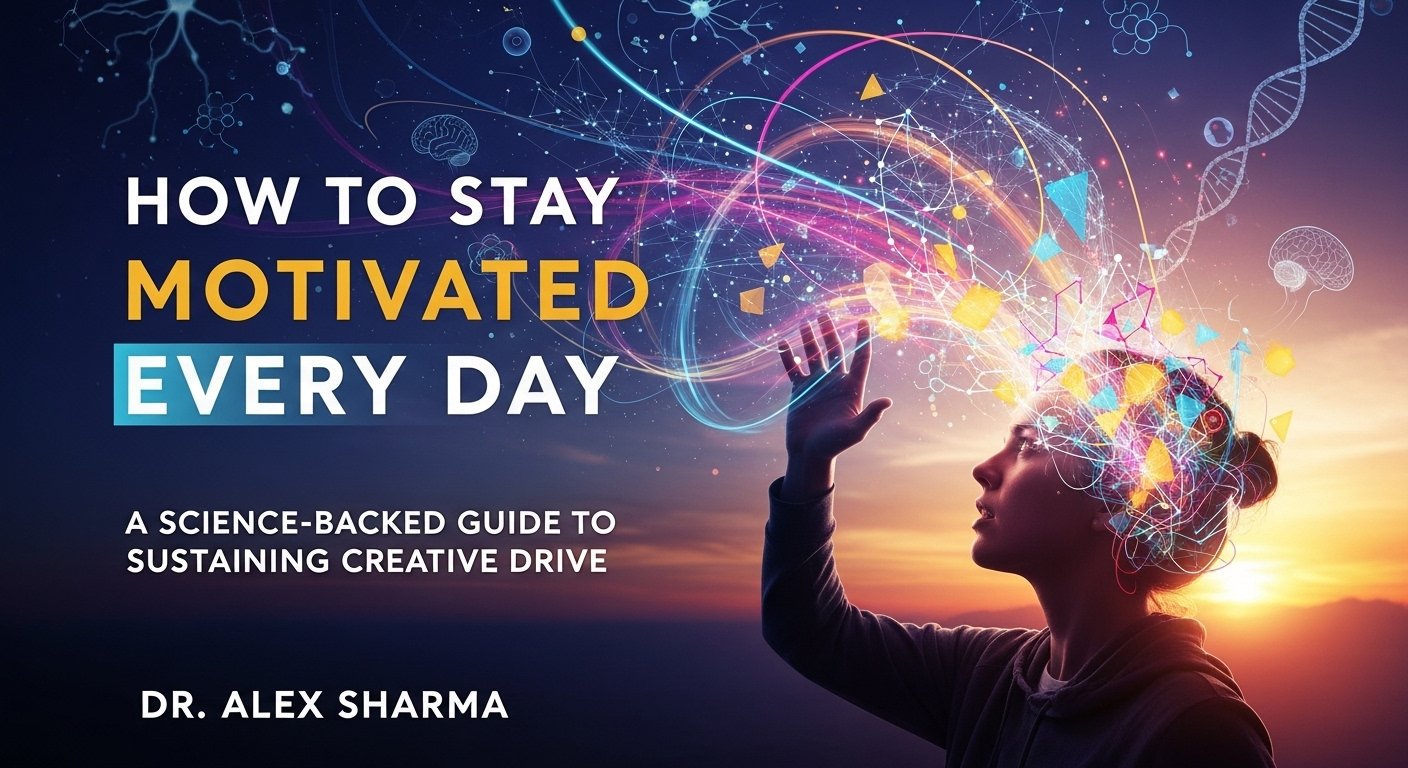
In the ateliers of Mexico City, where sculptors shape clay long after the tourists have left, and in the community halls of Battagram where local organizers plan the next river-cleanup campaign, the same quiet reckoning arrives each morning. The canvas waits. The meeting agenda sits unfinished. The body feels heavy with yesterday’s unfinished tasks. Motivation, that elusive current, does not arrive on command. It must be courted, understood, and gently sustained. For creatives, thinkers, and activists who live at the intersection of personal expression and public consequence, learning how to stay motivated every day is less a productivity hack than a form of cultural stewardship.
This matters now more than ever. Digital platforms promise instant validation yet deliver algorithmic fatigue. Economic precarity and ecological dread erode the sense that individual effort counts. Burnout has become a shared vernacular across continents. Yet the science of human drive offers precise, humane tools that respect the complexity of creative lives rather than reducing them to checklists. Drawing on decades of research in psychology and neuroscience, and informed by practices that have sustained artists and movements worldwide, this guide explores how to nurture daily momentum without sacrificing depth or joy.
The Neuroscience of Drive: Dopamine and the Art of Anticipation
At the heart of daily motivation lies the brain’s dopamine reward system. Far from the simplistic “pleasure chemical” of popular lore, dopamine surges most powerfully in anticipation of reward rather than its arrival. This biological truth explains why vague ambitions drain energy while tiny, visible steps energize. Neuroscientists have shown that each small completion lights up the ventral tegmental area, priming the system for the next effort. For a painter laying down the first wash of color or an activist drafting one persuasive paragraph of a grant proposal, the key is to design work that offers frequent, honest signals of progress.
Intrinsic motivation, the drive that arises from within rather than external carrots or sticks, proves far more durable. Self-Determination Theory, developed by psychologists Edward Deci and Richard Ryan, identifies three essential nutrients: autonomy, competence, and relatedness. When creators choose their own subject matter, feel they are improving at their craft, and sense their work connects to a larger community, dopamine flows more steadily and exhaustion recedes.
Entering the Flow State: When Time Bends Around Purpose
Mihaly Csikszentmihalyi’s research on flow revealed a psychological sweet spot where challenge and skill balance perfectly. In this state, self-consciousness fades, time distorts, and work feels almost automatic. Dopamine, norepinephrine, and other neurochemicals flood the system, turning effort into absorption. Musicians rehearsing a complex passage, writers lost in a manuscript at 3 a.m., or street artists spray-painting under deadline often describe the same sensation: the work is doing them.
To invite flow more reliably, structure the day around a clear, moderately difficult task with immediate feedback. Eliminate distractions for a set window. The payoff is not only higher output but deeper satisfaction, the kind that makes the next morning feel inviting rather than obligatory.
Goal Setting That Honors Complexity
Effective goal setting moves beyond the generic “dream big” mantra. Research favors specific, challenging yet attainable targets that align with intrinsic values. The most motivated creators treat goals as living experiments rather than rigid contracts. They break large visions into daily actions that feel meaningful in the moment. A documentary filmmaker aiming to finish a feature might commit to reviewing yesterday’s footage for exactly forty-five minutes before lunch. The smallness is the point; it keeps the dopamine system engaged without triggering overwhelm.
Habit Stacking: Layering Momentum into Ordinary Rituals
James Clear’s concept of habit stacking offers a practical bridge between intention and action. Instead of relying on willpower, pair a desired new behavior with an existing one. A ceramicist might stack ten minutes of sketching after the morning coffee ritual she already loves. An organizer could review campaign metrics immediately after closing the community center door each evening. The brain begins to associate the new step with the reliable cue, reducing mental friction over time.
This approach respects cultural realities too. In many East Asian traditions, daily rhythms have long been understood as accumulations of small, repeated gestures rather than heroic solitary efforts. The Japanese concept of ikigai, the intersection of what you love, what you are good at, what the world needs, and what you can be paid for, reframes motivation as a form of harmonious contribution rather than individual conquest. For global creatives navigating both personal ambition and collective responsibility, ikigai provides a culturally rooted alternative to purely Western self-optimization narratives.
Self-Discipline as Cultural Practice, Not Punishment
Self-discipline is often mischaracterized as grim endurance. In practice, it functions best as a set of supportive systems. Many artists maintain astonishing output through simple, repeated rituals: Beethoven counted exactly sixty coffee beans each morning; Maya Angelou rented hotel rooms solely for writing to remove domestic distractions; contemporary Nigerian painters begin studio time with a short communal prayer or song. These are not quirks but deliberate environmental designs that conserve decision-making energy for the work that matters.
In collectivist cultures, self-discipline frequently draws strength from relatedness. Motivation is sustained not by solitary willpower but by accountability to mentors, peers, or ancestors. An activist in Khyber Pakhtunkhwa who shows up for a literacy class every dawn does so partly because the faces of the students waiting remind her of shared futures. The science confirms what many traditions have long known: relatedness fuels persistence.
Preventing Mental Fatigue and Burnout Before They Arrive
Mental fatigue creeps in when cognitive resources are depleted by constant context-switching or unresolved emotional labor. Activists and artists are especially vulnerable because their work often carries moral weight. Prevention begins with honest boundaries. Schedule deep work during personal peak hours. Protect recovery with movement, sleep, and deliberate disconnection. Research on ultradian rhythms suggests the brain performs best in ninety-minute focused cycles followed by twenty-minute breaks, a pattern many studio practitioners discover intuitively.
Burnout prevention also requires reframing rest as integral to the creative process rather than its opposite. In Indigenous knowledge systems across the Americas and Oceania, periods of apparent inactivity, storytelling, or ceremony are understood as essential to long-term vitality. The progressive insight here is that sustainable drive demands we value cyclical rhythms over linear grind.
Growth Mindset and the Quiet Power of Positive Self-Talk
Carol Dweck’s work on growth mindset distinguishes those who view abilities as fixed from those who see them as malleable through effort. The latter group treats setbacks as information rather than indictments. A rejected grant application becomes data about how to strengthen the next proposal. This orientation sustains motivation because it keeps the possibility of improvement alive.
Positive self-talk functions as an internal translator of experience. Instead of “I’m not disciplined enough,” the practiced voice says “This is the part that always feels heavy at first.” Studies in cognitive psychology show such reframing lowers cortisol and improves follow-through. For cultural producers whose identities are often tied to public judgment, learning to narrate one’s own process with compassion becomes an act of resistance against perfectionism and comparison.
Motivation as a Living Cultural Practice
How to stay motivated every day ultimately reveals itself not as a solitary quest for peak performance but as a relational, culturally embedded practice. The science provides the mechanisms: dopamine pathways, flow conditions, habit architecture, mindset shifts. The deeper wisdom comes from observing how creators across continents have woven these elements into lives of meaning. They design small wins, protect time for absorption, stack habits onto existing rituals, speak to themselves with patience, and remember that their drive serves something larger than personal acclaim.
In the end, daily motivation is less about forcing yourself to begin than about arranging your inner and outer worlds so that beginning feels inevitable. The studio door opens. The meeting begins. The next sentence arrives. And tomorrow, the current is already waiting, quieter perhaps, but steady, because you have learned to meet it on terms that honor both the science of your brain and the culture of your making.
You May Also Like: Reclaim Your Time: Proven Tips for Maintaining a Healthy Work-Life Balance