
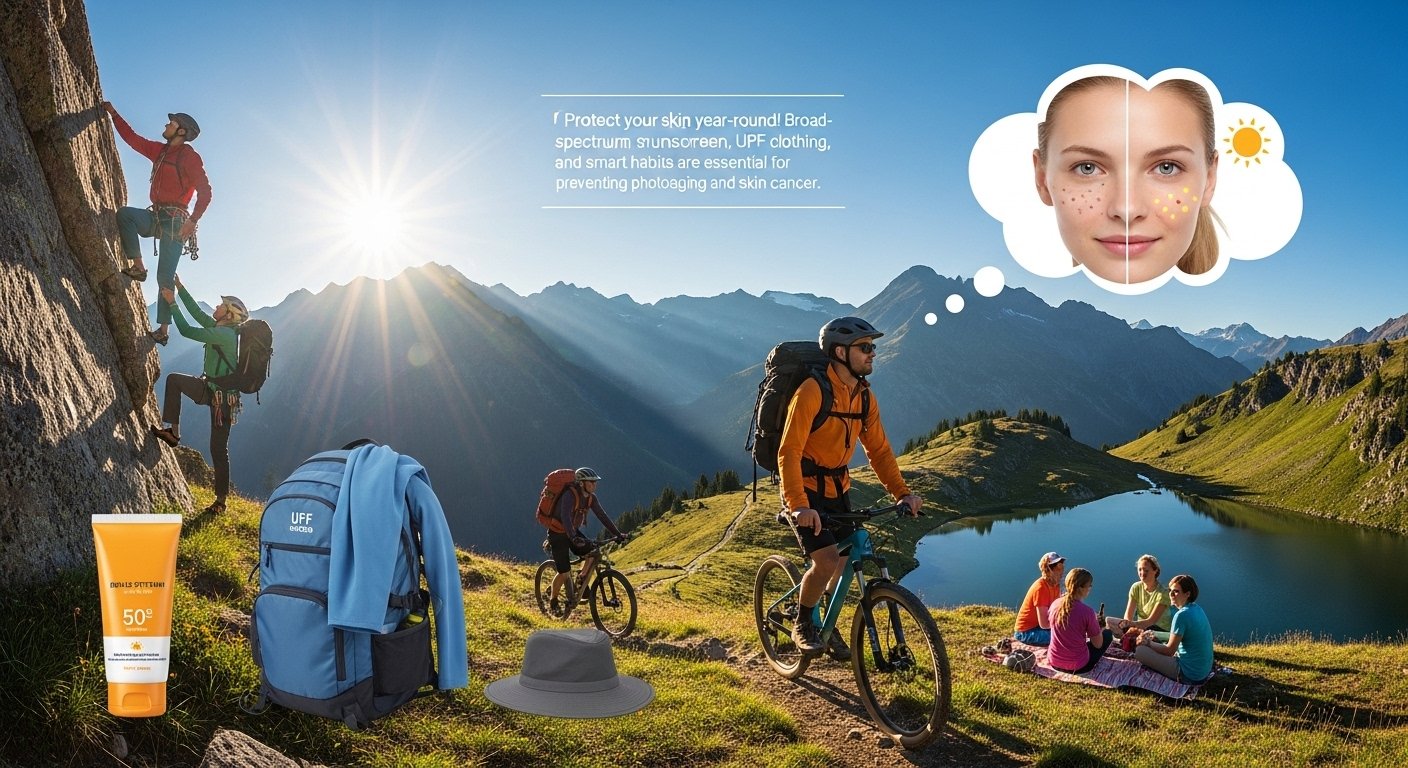
Picture this: you catch your reflection after a day outdoors or even a quick drive, and those fine lines around your eyes or stubborn dark spots seem more noticeable than before. As a health-conscious person, outdoor enthusiast, or busy parent, you might wonder if you’re doing enough to shield your skin. You’re not alone in worrying about premature aging or the risk of skin cancer. Sun exposure causes up to 90 percent of visible skin changes we blame on time, known as photoaging, and raises the chances of issues like melanoma.
This guide shows you exactly how to protect your skin from sun damage year-round. We will break down the science of ultraviolet radiation in simple terms, share practical daily habits that fit real life, and offer ways to address existing damage. Whether you need tips for winter hikes, car commutes, or pregnancy, these evidence-based strategies from dermatology experts will help you keep your skin healthy, even-toned, and youthful. Small changes today make a big difference tomorrow.
Understanding Sun Damage: UVA, UVB, and Photoaging
Sun damage happens deep at the cellular level, but you do not need a science degree to grasp it. UVA and UVB rays are the main culprits in ultraviolet radiation that reaches Earth’s surface. Both damage skin over time, yet they work differently.
UVA vs UVB Rays Explained
UVA rays penetrate deeper into the skin. They break down collagen and elastin fibers, which leads to wrinkles, sagging, and that leathery texture many notice with age. These rays pass through clouds, windows, and even car glass, so protection matters every day, not just at the beach.
UVB rays are stronger at the surface and cause sunburns by directly damaging skin cell DNA. They play a bigger role in skin cancers, including melanoma. Both types contribute to hyperpigmentation (dark spots) and raise overall cancer risk. The good news? You can interrupt this process with consistent habits.
Signs of Sun Damage on Your Face
Look closely in good lighting. Common signs of sun damage on face include fine lines and wrinkles, especially around the eyes and forehead. Age spots or solar lentigines appear as flat, brown patches. You might see freckles that darken, uneven skin tone, broken capillaries, or a rough, leathery feel.
If any of these sound familiar, know that they result from cumulative exposure. The encouraging part is that recognizing them early lets you take action now to prevent more.
Sunscreen Essentials: Broad-Spectrum Protection That Works
Sunscreen remains your most reliable daily tool. Not all formulas perform the same, so choose wisely for real results.
Decoding SPF Ratings and Why Broad-Spectrum Matters
Broad-spectrum sunscreen blocks both UVA and UVB rays. Look for this label every time. SPF ratings measure protection against UVB. SPF 30 blocks about 97 percent of those rays, while SPF 50 blocks 98 percent. Higher numbers offer only marginal gains, but they help during longer outdoor time.
Dermatologists from the American Academy of Dermatology recommend broad-spectrum SPF 30 or higher for daily use. Water-resistant versions stay effective after sweating or swimming for up to 80 minutes.
How to Apply Sunscreen Correctly
Use about one teaspoon for your face and neck. Apply it 15 to 30 minutes before going outside so it binds properly. Reapply every two hours, or right after swimming, toweling off, or heavy sweating.
For best results, choose mineral options with zinc oxide or titanium dioxide if you have sensitive skin. These sit on top of the skin and reflect rays rather than absorbing them. Chemical filters work well too but may irritate some complexions. Test a small area first if unsure.
Multi-Layered Defense: Habits Beyond Sunscreen
Sunscreen alone is powerful, yet layering defenses creates stronger protection. Think of it as a complete routine that fits your lifestyle.
Follow the Shadow Rule and Seek Shade
Here is a simple trick experts call the shadow rule. If your shadow appears shorter than your height, ultraviolet rays are at peak strength. This usually happens between 10 a.m. and 4 p.m. Seek shade during those hours, especially for kids or long outings.
A shady tree, umbrella, or awning cuts exposure dramatically. Parents, teach this rule during park time. It becomes second nature and keeps everyone safer without constant reminders.
UPF Clothing, Wide-Brimmed Hats, and Sunglasses
UPF clothing offers built-in protection. UPF 50+ blocks 98 percent of UV rays. Opt for long sleeves, pants, or rash guards made from tightly woven, dark fabrics. They work even when wet, unlike regular cotton.
Pair them with a wide-brimmed hat (at least three to four inches) that shades your face, neck, and ears. UV-blocking sunglasses protect your eyes and the delicate skin around them. These items feel like smart fashion choices, not chores.
Practical Protection for Everyday Life
Life does not pause for perfect weather, so adapt protection to common scenarios.
How to Protect Your Skin from Sun Damage in Winter
Many assume winter means no worries, but how to protect your skin from sun damage in winter matters just as much. Snow reflects up to 80 percent of UV rays, and high altitudes (common in areas like Khyber Pakhtunkhwa) intensify exposure. Clouds do not block rays either.
Apply broad-spectrum sunscreen to exposed skin every morning. Wear UPF clothing or layers that cover arms and neck during snowy hikes or drives. Your skin will thank you when spring arrives without extra spots or dryness.
How to Protect Your Skin from Sun Damage While Driving
Commuters often overlook this one. How to protect your skin from sun damage while driving starts with awareness that UVA rays pass straight through side windows. The left side of many drivers’ faces shows more damage over years.
Keep a tube of sunscreen in the car and apply it to your face, neck, and hands before starting the engine. Consider UV-protective window film for long-term vehicles. A wide-brim hat or scarf adds easy coverage without effort.
Sun Safety During Pregnancy
Hormonal changes raise melasma risk (those dark patches on the forehead or cheeks). How to protect your skin from sun damage during pregnancy means choosing gentle options. Prefer mineral sunscreens with zinc oxide or titanium dioxide. They stay on the surface and are considered safe for both you and baby.
Layer with UPF clothing, hats, and shade. Consult your doctor about any concerns, but these steps help prevent new hyperpigmentation while supporting healthy skin.
Can You Reverse Sun Damage Naturally?
You cannot erase every mark, but you can improve appearance and stop further harm. Consistent care makes a visible difference.
Skincare Ingredients for Hyperpigmentation and Photoaging
Start with proven actives. Vitamin C serum brightens and fights free radicals that worsen photoaging. Niacinamide calms inflammation and evens tone. Retinoids (or gentler retinol) boost collagen production and fade spots over time.
Apply them at night after gentle cleansing. Pair with a good moisturizer to avoid irritation. For more ideas, check our guide to the best skincare ingredients for aging skin. Always patch-test new products.
Professional Dermatological Treatments
When home care needs backup, see a dermatologist. Chemical peels, laser resurfacing, or intense pulsed light (IPL) target hyperpigmentation and stimulate renewal. These options work well for deeper photoaging.
Results improve with continued sun protection afterward. The Skin Cancer Foundation offers excellent resources on treatment safety and expectations.
Balancing Protection with Vitamin D Synthesis
Some worry that daily sunscreen blocks healthy vitamin D synthesis. The truth is reassuring. Brief midday exposure (10 to 15 minutes on arms and face, two to three times a week) usually suffices for most people. After that, cover up or apply sunscreen.
Diet and supplements provide reliable vitamin D without UV risks. Fatty fish, fortified foods, or a daily tablet keep levels steady. Your doctor can check levels with a simple blood test if needed.
Avoiding Common Sun Protection Mistakes
Even careful people slip up. Applying too little sunscreen is the top error. Skipping reapplication during long days comes in second. Forgetting hands, ears, and lips leads to surprise damage there too.
Another pitfall: relying only on sunscreen without shade or clothing. Combine all layers for best results. Avoid “without sunscreen” myths. While UPF clothing and shade help greatly, the strongest defense mixes everything.
Finally, do not wait for vacation. Daily habits prevent the slow buildup that shows up years later.
Start Protecting Your Skin Today
You now have a complete roadmap for how to protect your skin from sun damage. From understanding UVA and UVB rays to mastering broad-spectrum sunscreen, UPF clothing, and smart habits for winter, driving, or pregnancy, these steps fit busy lives.
Consistent protection reduces photoaging, hyperpigmentation, and skin cancer risk while supporting vitamin D synthesis safely. Your future self will notice smoother, brighter skin and greater peace of mind.
Pick one change this week, such as adding morning face sunscreen or packing a hat for outings. Small steps build lasting results. You have the power to keep your skin healthy and glowing for years ahead.
You May Also Like: Best Moisturizers for Different Skin Types: Derm-Approved Guide