
Ever grabbed a new serum promising glowing skin, only to wake up with breakouts, tightness, or that frustrating midday shine? You are not alone. Countless skincare beginners and enthusiasts feel overwhelmed by endless product aisles, unsure why their skin reacts the way it does. The truth is, most issues stem from mismatched routines rather than bad luck. Learning how to identify your skin type unlocks the foundation for effective care, better product choices, and a healthier skin barrier.
This practical guide cuts through the confusion with simple at-home methods, clear science explanations, and tailored advice. Whether you deal with dryness, oiliness, breakouts, or sensitivity, or you simply want to stop guessing, you will walk away confident and empowered. No fancy tools or expensive tests required, just honest observation and a few minutes of your time.
Why Knowing Your Skin Type Matters More Than You Think
Your skin is your body’s largest organ, and it works hard every day to protect you. Yet without understanding its unique needs, even the best products can backfire. Sebum production, or the natural oil your skin makes, plays a starring role here. Too much leads to shine and clogged pores. Too little causes flakiness and discomfort. Getting this balance right transforms your routine from hit-or-miss to reliable.
Identifying your skin type also helps you respect your skin barrier health. A strong barrier keeps out irritants while locking in moisture. When it weakens (often from the wrong products), you experience more trans-epidermal water loss, or TEWL for short. That means water escapes faster, leaving skin dehydrated even if it feels oily on the surface.
Think about it: Have you ever felt your cheeks tight after washing while your nose stays shiny? That mismatch is your skin speaking loud and clear. Once you listen, you choose products that support your barrier instead of stressing it. The payoff? Fewer breakouts, calmer sensitivity, smoother skin texture, and real confidence in the mirror.
For men navigating the same shelves, the process works identically, though hormones can mean higher sebum production on average. No matter your gender or age, this knowledge saves time, money, and frustration.
The Science Made Simple: What Drives Your Skin’s Behavior
Skin type boils down to how much oil and water your skin holds naturally. Sebum production comes from glands in the dermis. It keeps skin supple but can overwhelm if overactive. The T-zone (forehead, nose, and chin) often produces more sebum because those areas have higher gland density.
Hydration versus moisture confuses many beginners. Hydration refers to water content inside skin cells. Moisture comes from lipids (oils) in the barrier that seal that water in. Dry skin might lack both. Oily skin can still feel dehydrated if the barrier lets water escape via high TEWL.
Enlarged pores often signal higher sebum and can make skin look textured or bumpy. Sensitive skin triggers include fragrances, harsh acids, weather shifts, or even stress. These cause redness, stinging, or itchiness.
Your skin type can shift with seasons, hormones, diet, or age, so check periodically. This is not about labeling yourself forever. It is about understanding your skin’s current language so you respond with care instead of confusion.
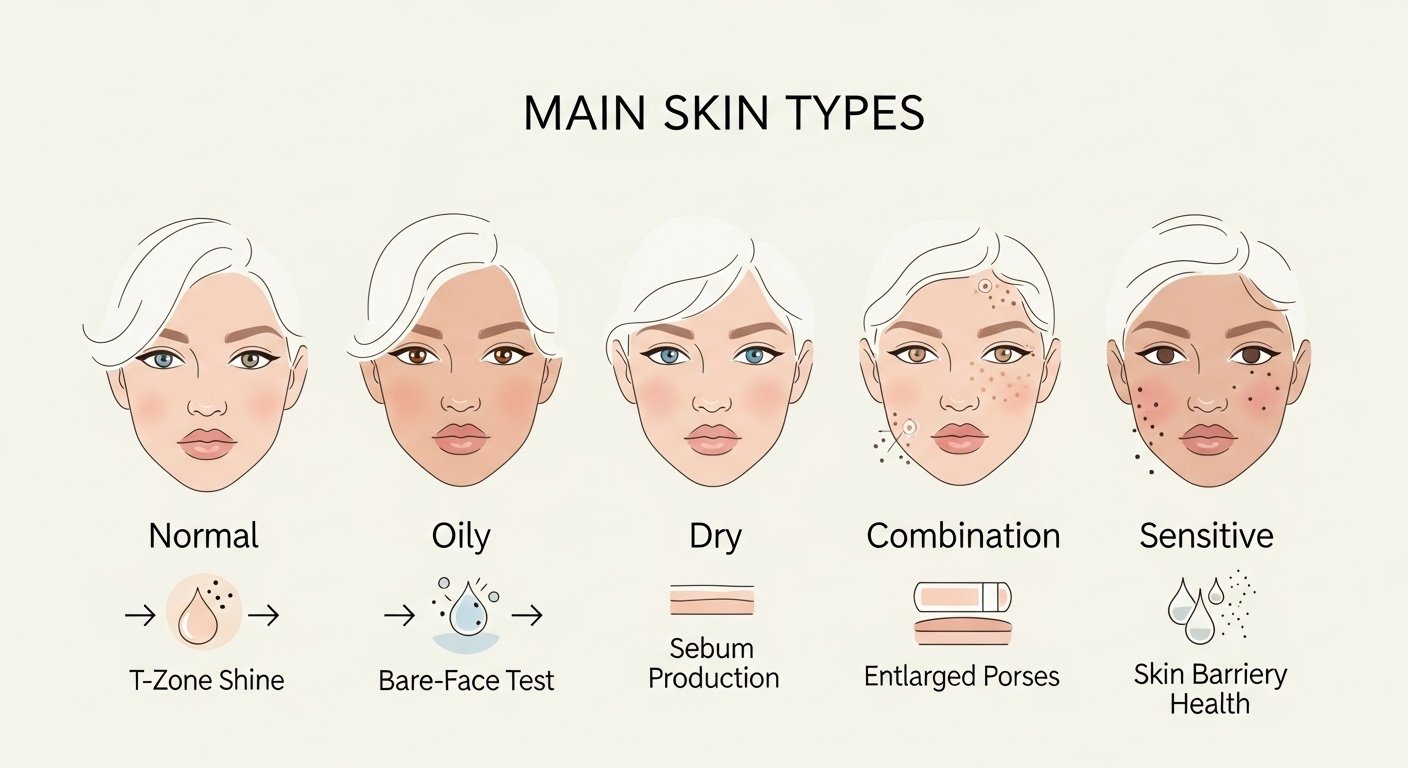
The Five Main Skin Types and What They Feel Like
Dermatologists recognize five primary categories. Each behaves differently and needs specific support.
Normal skin feels balanced: soft, smooth, with tiny pores and no major issues. It rarely breaks out or feels tight. You might see minimal shine and even tone.
Oily skin produces plenty of sebum, especially in the T-zone. Expect shine by midday, enlarged pores, and occasional breakouts. It can look thick or shiny but often feels less sensitive to weather.
Dry skin struggles with low sebum and higher TEWL. It feels tight right after cleansing, looks flaky or rough, and shows fine lines faster. Cheeks may feel papery, and skin texture appears dull.
Combination skin mixes it up: oily T-zone with drier cheeks or jawline. The forehead and nose shine while other areas pull or flake. This is the most common type.
Sensitive skin reacts easily to triggers like new products, pollution, or temperature changes. It may sting, redden, or itch regardless of oil levels. Sensitivity can layer over any other type, so watch for redness even if your oil balance seems fine.
Many people fall into a primary category with sensitive traits. The key is honest observation, not wishful thinking.
Simple Ways to Identify Your Skin Type at Home
You do not need a dermatologist appointment or expensive kit to start. These no-product methods give accurate clues in under an hour.
The Bare-Face Test: Your Easiest Starting Point
This classic method reveals your skin’s natural state without interference.
- Gently cleanse with a mild, fragrance-free cleanser.
- Pat dry softly.
- Wait 30 to 60 minutes in a normal room (no heavy exercise or fans).
- Examine in natural light.
Shiny all over? You lean oily. Tight or flaky? Dry skin is calling. Shine only in the T-zone with drier cheeks? Combination wins. Balanced and comfortable? Normal. Any stinging or redness? Add sensitive to the mix.
This how to identify your skin type without products approach works beautifully because it strips away makeup, sunscreen, or serums that mask true behavior. Do it on a low-stress day for the clearest read.
Using the Blotting Paper Method to Identify Your Skin Type
Blotting papers (cheap at any drugstore) offer quick visual proof of sebum production.
After the bare-face wait time, press a fresh sheet gently to your forehead, nose, cheeks, and chin. Hold it to the light.
Heavy oil marks everywhere signal oily skin. Almost none? Dry. Oil only from the T-zone? Combination. Minimal but even? Normal.
This technique shines for how to identify your skin type at home because it quantifies oil without guesswork. Try it midday after skipping moisturizer for even stronger results.
Observe Your Skin Throughout the Day
For a fuller picture, track changes from morning to evening. Note shine timing, tightness after washing, or how products sit. Does makeup slide off by lunch? Oily tendencies. Does foundation look cakey on cheeks? Dry or combination.
Jot quick notes in your phone. Patterns emerge fast and help confirm the bare-face or blotting results.
How to Identify Your Skin Type for Men
Men often assume their skin is simply “tough” or oily because of higher testosterone-driven sebum. The same tests apply exactly. The bare-face method works after your usual shave (use a gentle, non-foaming cleanser). Blotting papers cut through any post-shave residue.
Men’s skin tends toward larger pores and more oil, but dryness from shaving irritation is common too. Sensitivity shows up as razor burn or redness. Follow the same steps, and you will dial in a routine that handles both beard areas and shaved skin without guesswork.
How to Identify Your Skin Type and Sensitivity Levels
Sensitivity often overlaps. During any test, note immediate reactions: burning, itching, or visible redness within minutes of cleansing or blotting. Common sensitive skin triggers include alcohol in toners, strong fragrances, or sudden weather shifts.
If your skin flushes easily or reacts to multiple products, treat it gently no matter the oil level. Layer this insight onto your main type for a complete profile.
When Professional Help Makes Sense
At-home tests give excellent starting points, but persistent issues deserve expert eyes. A dermatologist offers dermatological evaluation with tools to measure exact sebum levels, barrier strength, and TEWL.
They can also assess your Fitzpatrick scale rating (I to VI), which focuses on how your skin tone reacts to sun rather than oil or dryness. This matters for choosing proper SPF and avoiding pigmentation issues. Book an appointment if breakouts won’t quit, dryness cracks despite creams, or sensitivity worsens.
Your Personalized Skincare Routine After You Identify Your Skin Type
Now the fun part: building habits that actually work.
For normal skin, keep it simple: gentle cleanser, lightweight moisturizer, and daily SPF. Add antioxidants if desired.
Oily skin thrives with foaming cleansers, gel moisturizers, and ingredients like niacinamide or salicylic acid to control shine and pores. Mattifying sunscreens prevent that greasy feel.
Dry skin needs creamy cleansers, rich creams packed with ceramides and hyaluronic acid to fight TEWL, and occlusive oils at night. Avoid hot water and harsh scrubs.
Combination skin uses a balancing approach: lightweight gel on the T-zone, richer cream on cheeks. Spot-treat oilier areas.
Sensitive skin sticks to minimal ingredients: fragrance-free, hypoallergenic formulas with soothing centella or oat. Patch-test everything.
No matter your type, consistency beats complexity. Cleanse twice daily, moisturize, and protect with broad-spectrum SPF 30 or higher. Reassess every season.
Learn more about tailoring your routine in our guide to building the best skincare routine after identifying your skin type.
Common Mistakes Beginners Make (and How to Avoid Them)
Many skip the observation step and grab trendy products marketed to everyone. Others overwash to fight oil, which actually ramps up sebum production. Ignoring the barrier leads to more TEWL and a vicious cycle of dryness and breakouts.
Myth alert: Oily skin does not mean you skip moisturizer. It just needs the right lightweight kind. Dry skin is not fixed by heavy creams alone if the cleanser strips barrier lipids.
Seasonal changes trip people up too. Winter often dries skin further, while summer boosts oil. Adjust gently instead of starting over.
Final Thoughts: Your Skin, Your Rules
You now hold the keys to understanding your skin like a pro. From the quick bare-face test to the blotting paper method, these tools empower you to move beyond confusion and into confidence. Remember, how to identify your skin type is not a one-time quiz. It is an ongoing conversation with the skin you live in every day.
Start tonight with the bare-face test. Note what you see, pick one or two products matched to your findings, and watch the difference unfold. Your future self (and your skin barrier) will thank you.
You have got this. Clearer, calmer, happier skin is closer than you think.
You May Also Like: Daily Skincare Routine for Healthy Skin: What You Really Need