
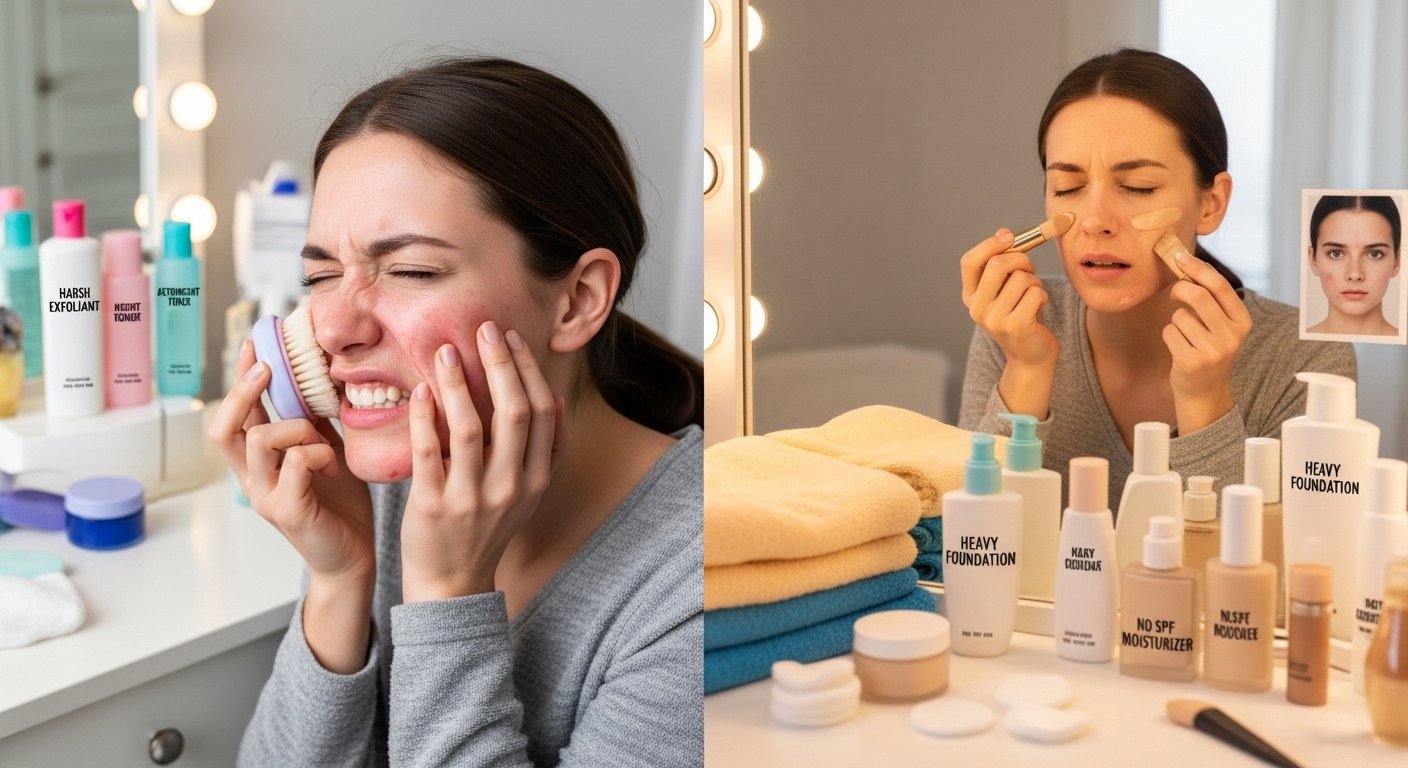
You’ve poured money into serums, followed every viral routine on social media, and still wake up to fresh breakouts or notice those fine lines deepening. Sound familiar? If your skin feels irritated, dull, or stuck in a plateau despite your best efforts, you are not failing. You are likely making a few common skincare mistakes to avoid that quietly sabotage your progress. These subtle habits damage your skin barrier health, trigger inflammation, and speed up aging, all while making products less effective.
As your trusted skincare big sister, I am here to help you shift from a “more is better” mindset to one that actually works. In this guide, we will uncover the most frequent pitfalls, from over-exfoliation to seasonal slip-ups, and give you simple, science-backed fixes. Whether you are a beginner building your first routine or an intermediate user frustrated by sensitivity, these changes will restore your glow, prevent acne, and keep your skin youthful. Let’s get your skin thriving again.
Why You Should Stop Over-Exfoliating Your Face
Over-exfoliation tops the list of common skincare mistakes to avoid for acne-prone skin. You reach for that AHA, BHA, or physical scrub thinking it will clear pores and smooth texture. Instead, it strips away the protective outer layer of your skin. This leads to increased transepidermal water loss, where moisture escapes faster than your skin can replace it. The result? Dryness, redness, and paradoxically more breakouts as your skin ramps up oil production to compensate.
Dermatologists see this all the time. When the skin barrier weakens, it becomes more permeable to irritants and bacteria, which explains why your once-clear complexion suddenly rebels. Plus, chronic inflammation from over-exfoliation accelerates collagen breakdown, making fine lines appear sooner.
The fix is gentler than you think. Limit chemical exfoliants to two or three times a week maximum, and always follow with a rich, ceramide-packed moisturizer to rebuild that barrier. Listen to your skin: if it feels tight, stings, or looks flaky, pause the actives for a few days. Start slow with one active ingredient at a time and patch test everything. Your skin will thank you with fewer breakouts and a smoother, more even tone.
For beginners especially, remember that gentle is powerful. A simple dermatologist-recommended routine might include just a mild cleanser, hydrating serum, moisturizer, and SPF. No need for a 10-step process right away.
Why Washing Your Face with Hot Water Is Bad for Your Skin
Hot showers feel amazing after a long day, but that steamy water on your face is one of the sneakiest common skincare mistakes to avoid. The heat dissolves your skin’s natural oils faster than anything else, leaving the barrier compromised and prone to irritation. This disruption boosts transepidermal water loss and makes your complexion look dull and dehydrated, even if you slather on moisturizer afterward.
Many people notice their skin feels tighter and more reactive after hot-water cleansing, especially in winter when indoor heating already dries things out. For acne-prone skin, it can worsen inflammation because a weakened barrier lets bacteria thrive more easily.
Switch to lukewarm water instead. It cleans effectively without stripping essential lipids. Pair this with a pH-balanced cleanser (around 5.5, matching your skin’s natural acidity) rather than harsh, foamy soaps that throw off balance and cause rebound oiliness. You will see calmer skin within days. If your routine includes makeup or sunscreen, this small tweak makes double cleansing far more effective too.
Mastering Double Cleansing: When One Step Is Not Enough
Skipping proper makeup and sunscreen removal ranks high among common skincare mistakes to avoid, especially if you wear SPF daily or live in humid climates. A single water-based cleanser cannot fully dissolve oil-based products like sunscreen or foundation. Leftover residue clogs pores overnight, leading to breakouts and dullness.
Double cleansing changes everything. Start with a gentle oil or balm cleanser to melt away makeup, SPF, and sebum. Follow with a lightweight, pH-balanced water-based cleanser to wash away the rest without stripping. This method preserves skin barrier health while ensuring a truly clean canvas for your actives and moisturizers.
I remember a client who swore her routine was perfect yet battled persistent blackheads. Once she added an oil cleanser at night, her skin cleared dramatically. For summer, when sweat and humidity mix with sunscreen, double cleansing becomes non-negotiable. It prevents that greasy, congested feeling many experience in warmer months.
If you are new to this, choose non-comedogenic products labeled specifically for your skin type. Your skin will feel softer, absorb treatments better, and show fewer breakouts.
The Correct Order to Apply Skincare Products
Applying products in the wrong sequence is a classic mistake that wastes expensive serums and reduces their effectiveness. The correct order to apply skincare products follows a simple logic: thinnest, lightest textures first so heavier creams can seal everything in.
After cleansing (and toning if you use one), layer water-based serums or essences, then treatment actives like niacinamide or vitamin C. Follow with richer moisturizers, and finish with facial oils or SPF in the morning. This skincare layering order ensures each ingredient penetrates properly rather than sitting on top of thicker formulas.
Many beginners apply thick creams first and wonder why their serums do nothing. The science is clear: thinner products need to reach the skin directly. For acne-prone skin, keep actives minimal and introduce them one at a time to avoid overwhelming the barrier.
Pro tip: wait 30 to 60 seconds between layers so each absorbs fully. This small habit maximizes product efficacy and supports long-term skin health.
Sun Protection Factor (SPF) Mistakes That Accelerate Aging
Forgetting or skimping on daily SPF is the single biggest contributor to premature aging, yet it remains one of the most overlooked common skincare mistakes to avoid. UV rays break down collagen and elastin even on cloudy days or through windows. Without broad-spectrum protection (at least SPF 30), you invite wrinkles, dark spots, and loss of firmness.
People often apply too little, skip reapplication every two hours, or forget the neck, hands, and ears. In summer, when UV exposure spikes, inconsistent SPF leads to more breakouts from heat and inflammation too.
Choose a lightweight, non-comedogenic sunscreen you actually enjoy wearing so you stick with it. Mineral formulas with zinc oxide work wonderfully for sensitive or acne-prone skin. Apply a generous nickel-sized amount to the face and reapply throughout the day. Your future self will thank you for fewer lines and even tone.
How to Fix a Damaged Skin Barrier and Stop Transepidermal Water Loss
A compromised skin barrier sits at the root of so many frustrations: sensitivity, persistent breakouts, and faster aging. Signs include tightness after cleansing, redness, flakiness, or products that suddenly sting. When the barrier weakens, transepidermal water loss increases, dehydration sets in, and inflammation follows.
The good news? You can repair it quickly with intention. Focus on gentle, barrier-supporting ingredients like ceramides, cholesterol, fatty acids, and niacinamide. Cut back on actives for a week or two while you rebuild. A simple repair routine might look like: gentle cleanser, hydrating serum, rich moisturizer, and SPF.
Many see dramatic improvement in just 10 to 14 days. For acne-prone skin, this approach often reduces breakouts more effectively than aggressive treatments ever could. If your skin feels overwhelmed, consider a short “skin reset” with minimal products. You will learn what your complexion truly needs.
Choosing Non-Comedogenic Products for Acne-Prone Skin
Using comedogenic (pore-clogging) products quietly fuels breakouts for countless people. Heavy creams, certain oils, and even some “natural” ingredients can trap sebum and bacteria inside pores. This mistake is especially common when chasing hydration without checking labels.
Always scan for non-comedogenic products designed not to clog pores. Look for gel or lightweight textures in summer and for oily skin. Ingredients like squalane or jojoba oil often work well, while coconut oil or cocoa butter frequently cause issues.
Switching to non-comedogenic options can clear skin faster than any spot treatment. Combine this with proper cleansing, and your acne-prone skin will finally calm down.
Common Skincare Mistakes to Avoid During Summer
Summer brings its own set of challenges that amplify common skincare mistakes to avoid. Humidity boosts oil production, sweat mixes with sunscreen, and heat makes heavy products feel suffocating. Many reach for thicker moisturizers out of habit or skip SPF because “it is indoors only.” Others overwash to combat shine, further damaging the barrier.
Adjust your routine seasonally. Opt for lightweight, gel-based moisturizers and non-comedogenic sunscreens. Double cleanse more thoroughly at night. Incorporate calming ingredients like centella or green tea to soothe heat-induced irritation. These tweaks prevent summer breakouts and keep aging at bay even when UV levels peak.
Building Your Dermatologist-Recommended Routine for Beginners
If you are just starting out, the overwhelm is real. The secret is simplicity. A solid dermatologist-recommended routine focuses on four to five essentials: cleanser, treatment (if needed), moisturizer, and SPF. Introduce actives slowly, patch test, and give each change at least four weeks to show results.
Avoid the temptation to copy complicated influencer routines. Your skin is unique. Start basic, observe how it responds, and build from there. This patient approach prevents irritation and delivers lasting improvements in texture, clarity, and youthfulness.
Putting It All Together: Smarter Skincare Wins
By addressing these common skincare mistakes to avoid, you move from reactive firefighting to proactive skin health. Your barrier strengthens, breakouts decrease, and aging slows naturally. Small, consistent changes create the biggest transformations.
Start today by auditing just one habit, maybe swapping hot water for lukewarm or adding double cleansing. Your skin will respond with clarity, comfort, and that healthy glow you have been chasing. You have got this. Clearer, younger-looking skin is waiting on the other side of smarter habits.
You May Also Like: How to Choose the Right Skincare Products for Your Skin Type