
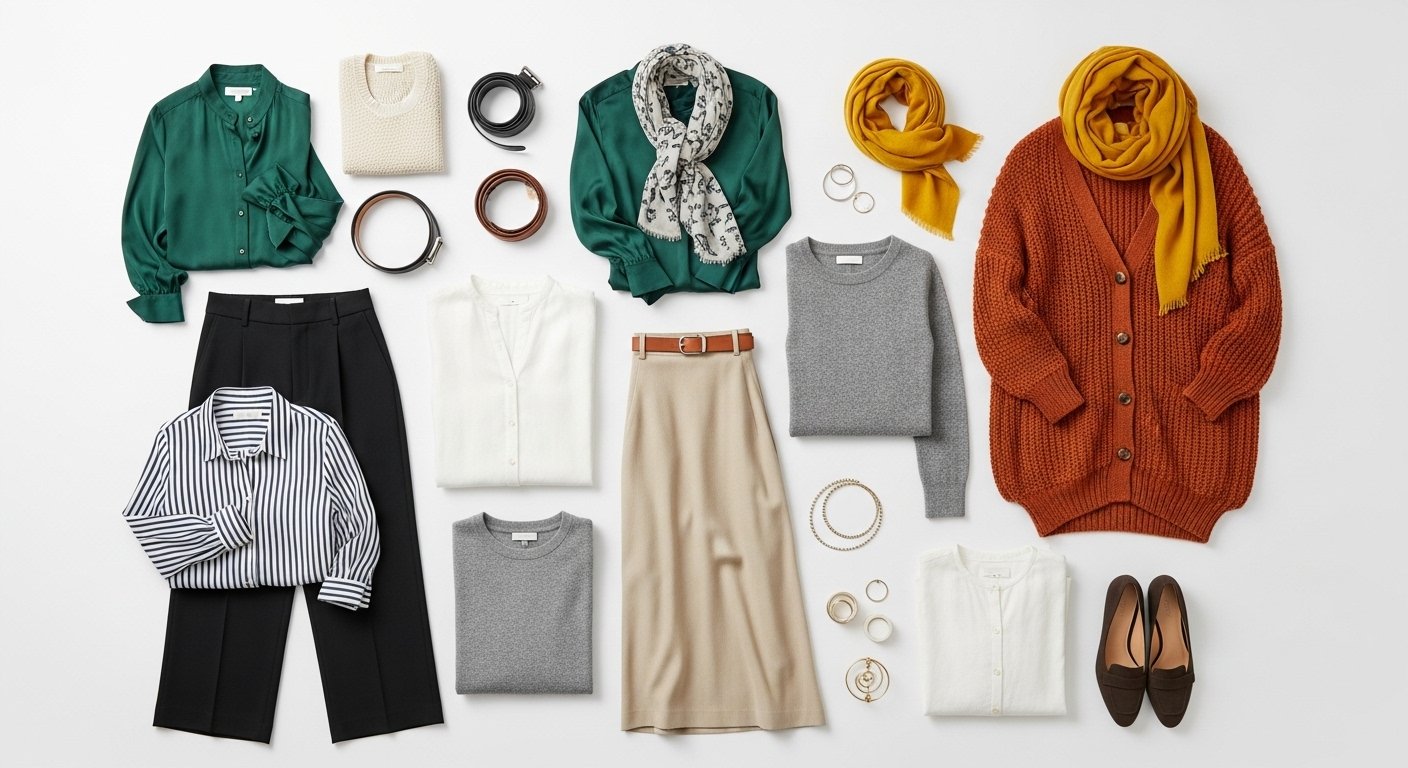
Picture this. You swing open your closet door, stare at racks packed with shirts, pants, dresses, and jackets, and still mutter the same old line: “I have nothing to wear.” You are not alone. Countless fashion-conscious women and men between 20 and 45 face this exact moment every morning, whether they are rushing to the office or planning a weekend outing. The fix does not require a shopping haul or a complete closet overhaul. It comes down to learning how to mix and match clothes like a pro.
This guide gives you the exact framework professional stylists use: color theory for fashion, outfit proportions, pattern mixing rules, fabric texture contrast, and neutral base pieces that anchor everything. You will discover how to treat your existing wardrobe as a goldmine of possibilities instead of a source of frustration. Along the way, you will build wardrobe versatility, style hero pieces that work overtime, and embrace sustainable styling that cuts down on unnecessary purchases. By the end, you will open your closet with confidence and walk out in fresh, cohesive looks you created yourself.
Why Most Closets Feel Overwhelming (And How Mixing and Matching Changes Everything)
The problem usually starts the same way. We buy individual pieces that catch our eye in stores or online, but we rarely think about how they play with what we already own. The result? A closet full of loners that never get worn together.
Mastering how to mix and match clothes like a pro flips that script. Instead of seeing separate items, you see combinations. A simple white button-down suddenly pairs with tailored trousers for work, relaxed jeans for weekends, or even layered under a knit sweater for cooler days. This shift creates endless outfits without adding a single new garment.
The payoff goes beyond style. You save money, reduce decision fatigue, and practice sustainable styling by making every piece count. No more “I wore that last week” guilt when you rotate the same reliable favorites in fresh ways.
The Foundations Every Pro Uses: Color, Proportion, Texture, and Pattern
Great outfits do not happen by accident. They rest on four simple pillars that anyone can learn. Let us break them down so you can start applying them today.
Color Theory for Fashion: Your Secret Weapon with the Color Wheel
Color theory for fashion sounds intimidating, but it is actually your easiest path to polished looks. Think of the color wheel as your roadmap.
Analogous colors sit next to each other on the wheel and always feel harmonious. Navy, teal, and sage green create calm, sophisticated outfits that feel effortless.
Complementary colors sit opposite each other and deliver instant pop. Think deep burgundy with soft olive, or classic navy with warm camel. These pairs make your outfits memorable without trying too hard.
For beginners, start with monochromatic looks. Pick one color family and play with different shades and textures. All black or all beige instantly looks intentional and slimming.
Pro tip: Keep a small color wheel printout or phone screenshot in your closet for the first few weeks. It takes the guesswork out of “does this go?”
Nailing Outfit Proportions for Visual Balance in Fashion
Even the most beautiful colors fall flat if proportions feel off. The goal is visual balance.
Use the rule of thirds: divide your body into thirds and avoid letting one piece dominate all three. A cropped jacket with high-waisted pants and ankle boots creates pleasing thirds. A long tunic with skinny jeans and flats can feel bottom-heavy unless you add volume on top with a structured blazer.
Balance volume too. Pair a flowy wide-leg trouser with a fitted tucked-in top. Or team an oversized sweater with slim straight-leg pants. This contrast flatters every body type and creates that “put-together” feeling.
Stand in front of a full-length mirror and ask yourself: Does this outfit feel balanced? If something feels heavy on the bottom or top-heavy, swap one piece and try again. You will feel the difference immediately.
Fabric Texture Contrast: Adding Interest Without Trying Too Hard
Texture is the unsung hero of mixing and matching. Smooth leather against chunky knit. Crisp cotton shirt with soft suede jacket. Matte silk dress with metallic accessories. These contrasts add depth and keep outfits from looking flat.
Start simple. Pair a silky blouse with structured denim. Or wear a bouclé tweed blazer over a smooth turtleneck. The eye loves that subtle difference even if you cannot name why the look works.
Sustainable bonus: Many natural-fiber pieces (think linen, wool, cotton) already offer beautiful textures. Learning how to care for natural fibers keeps them looking fresh longer, stretching your wardrobe even further.
Pattern Mixing Rules That Actually Work
Pattern mixing scares a lot of people, but the rules are straightforward and forgiving.
- Share at least one color between patterns. A floral with burgundy accents pairs beautifully with stripes that include the same burgundy.
- Vary the scale. Pair a large floral with tiny polka dots or wide stripes with micro-checks. Same-scale patterns fight for attention.
- Treat animal print and stripes like neutrals. Leopard spots mix with almost anything.
- Anchor busy looks with solids. A bold patterned top looks grounded next to solid pants.
- Limit yourself to two or three patterns at first. Confidence grows with practice.
Try this at home: Lay out three pieces on your bed (two patterns plus one solid) and see how they feel together. Take a quick photo. You will train your eye faster than you expect.
Building Capsule Wardrobe Essentials That Mix and Match Effortlessly
A capsule wardrobe is not about owning fewer clothes. It is about owning the right ones that work harder. Focus on 20 to 30 versatile pieces in neutral base colors (black, white, beige, navy, gray) and add a few hero pieces for personality.
Core capsule wardrobe essentials include:
- Crisp white button-down shirt
- Perfect-fit dark jeans
- Tailored black trousers
- Versatile blazer in a neutral tone
- Little black dress (or equivalent for men: tailored black shirt)
- Neutral knit sweater or cardigan
- White sneakers and classic loafers or boots
These pieces become your foundation. From here, you layer in accent colors, patterns, and textures. One capsule top can create ten different outfits depending on what you pair it with.
Step-by-Step Guide: How to Mix and Match Clothes Like a Pro
Ready to put it all together? Follow this exact process.
- Audit your closet honestly. Pull everything out and sort into love, maybe, and never-wear piles. Be ruthless.
- Identify your neutral base pieces. These become the backbone of 80 percent of your outfits.
- Choose two or three hero pieces. These are the statement items you adore (that bold blazer, printed midi skirt, or leather jacket).
- Experiment in front of the mirror. Give yourself 15 minutes per session. Try unexpected combinations.
- Photograph your favorite looks. Create a private album on your phone titled “Outfit Ideas.” Refer to it when you feel stuck.
For beginners, limit each session to mixing only tops with bottoms first. Once comfortable, add outerwear, shoes, and accessories.
How to Mix and Match Clothes Like a Pro for Work
Workwear needs polish without sacrificing comfort. Start with your neutral base pieces and elevate them.
A tailored blazer instantly dresses up jeans. Tuck a patterned blouse into high-waisted trousers and add a belt for definition. Layer a lightweight knit under a button-down for texture contrast on cooler days.
Color tip for the office: Stick to analogous or monochromatic schemes for a calm, professional vibe. Save complementary pops for accessories like scarves or shoes.
Many professionals find that three core bottoms (black trousers, neutral chinos, dark jeans) paired with five versatile tops create more than 15 work-appropriate outfits.
Styling Hero Pieces for Maximum Wardrobe Versatility
Hero pieces deserve to shine, but they also need to earn their keep.
That statement coat? Wear it over a simple white tee and jeans for weekends or over a dress for evenings. Your printed midi skirt? Pair it with a tucked-in solid tee for casual days or a crisp button-down for work. The leather jacket? It toughens up feminine dresses and softens structured suiting.
The secret is treating hero pieces like supporting actors rather than the whole show. Let them add personality while neutrals do the heavy lifting.
Common Mistakes to Avoid When Mixing and Matching
Even pros slip up sometimes. Here are the pitfalls to dodge:
- Ignoring scale in patterns (everything ends up looking busy).
- Forgetting proportions (one oversized piece needs a fitted counterpart).
- Over-matching (head-to-toe same color and texture feels flat).
- Skipping the mirror test (what looks good on the hanger may not flatter your shape).
- Buying impulsively without checking closet compatibility (the 48-hour rule helps here: try potential new pieces with three existing outfits before buying).
When you catch yourself making one of these mistakes, simply adjust one element. Small tweaks create big improvements.
Sustainable Styling: Maximize What You Own and Reduce Consumption
Every time you create a new combination from clothes already hanging in your closet, you vote against fast fashion. Sustainable styling is not about deprivation. It is about creativity and appreciation.
Focus on high-quality, timeless pieces that age gracefully. Calculate cost per wear in your head: that expensive sweater you wear twice a week becomes a bargain compared with cheap items worn once and forgotten.
Explore ethical brand ratings through resources like The Good On You directory to guide future mindful purchases. But for now, celebrate the outfits you are creating today from what you already love.
Practical Tips to Keep the Momentum Going
- Rotate your closet seasonally so fresh combinations catch your eye.
- Host a “mix-and-match night” with friends and swap styling ideas.
- Use the 48-hour rule for any new purchase: style it with existing pieces at home before committing.
- Keep a small notebook or phone note listing your favorite new combos.
Start Mixing and Matching Today
You already own everything you need to look and feel like your most stylish self. The only missing piece was the framework, and now you have it.
Pick one section of your closet this weekend, whether tops or bottoms, and spend 20 minutes experimenting with the principles above. Take photos of three new outfits. Wear one tomorrow. You will quickly see how mastering how to mix and match clothes like a pro transforms not just your wardrobe, but your entire approach to getting dressed.
Your closet is no longer a source of stress. It is now your personal styling playground. Go play.
You May Also Like: 10 Best Outfit Ideas for Casual Everyday Wear